
For enterprise tech and engineering leaders, the introduction of every new compliance framework triggers a familiar sense of exhaustion. First it was GDPR, then SOC 2, then NIS2, and now, formal AI governance.
It’s no surprise the industry feels this way. Artificial intelligence brings new operational risks, and 98% of organizations expect their compliance budgets to grow just to keep up with rules like the EU AI Act.
But modern AI governance isn’t just another layer of regulation. It’s speeding up a major change in how engineering teams manage security. Today’s compliance standards don’t accept static policy documents anymore. They require real-time data on identities, code deployments, API connections, and device access control.
Why the Traditional Audit Model Is Obsolete
For years, enterprise compliance relied on separate, project-based efforts. Security teams handled GDPR, SOC 2, and ISO 27001 as different checklists, each reviewed once a year.
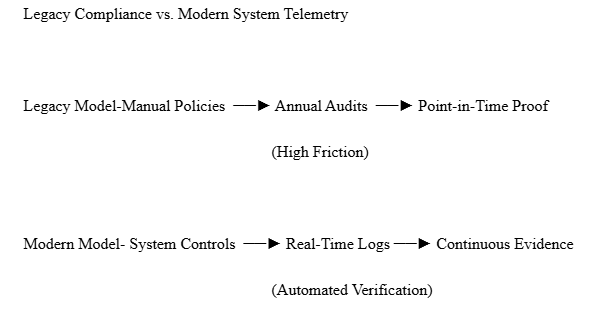
Today, the technical distinctions between these regulatory frameworks are fading. Whether an audit focuses on privacy standards, cyber resilience, or automated decision-making systems, regulatory bodies are asking developers and IT architects the exact same core question. Can your infrastructure automatically prove that security controls are active and functioning right now?
Core Operational Shifts for Engineering & IT Teams
To modernize AI and system compliance, teams need to move from manual policy writing to automated technical solutions:
- Continuous Identity & Access Monitoring: Swap out static permission charts for automated access controls that track machine identities, user privileges, and API keys across cloud environments.
- Real-Time Data Lineage & Telemetry: Set up logging systems that record how data moves through algorithms. This prevents data leaks and creates clear audit trails for reviews.
- Automated Evidence Collection: Use continuous monitoring tools to pull verification logs straight from production systems. This removes the need for manual spreadsheet work before security reviews.
Building Scalable Engineering Foundations
The future of enterprise technology compliance will not be defined by who writes the longest policy manual but by who builds the most resilient systems.
By integrating automated compliance verification directly into deployment pipelines, IT and software development leaders can satisfy stringent requirements from NIS2 to the EU AI Act without slowing down technical execution or creating administrative bottlenecks for engineering teams.