
Tech giants and cloud providers are quickly building physical infrastructure in Southeast Asia, the Middle East, Northern Europe, and Latin America. But they all face the same challenge: speed. Teams like specialized technicians, HVAC engineers, electricians, network architects, and security leads need to be on-site even before land permits are approved.
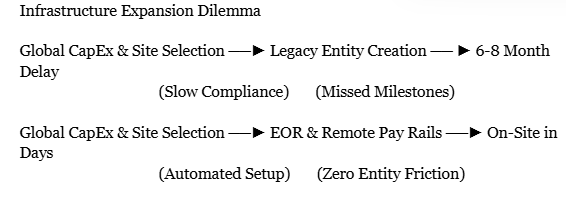
However, the traditional international expansion playbook setting up local legal entities, registering tax accounts, and dealing with foreign labor laws takes four to eight months. In a fast-moving market, waiting this long to handle paperwork means falling behind competitors before any equipment is even installed.
The Capital Boom vs. The HR Bottleneck
The global data center sector reached $383.8 billion in 2025 and is projected to hit $902.2 billion by 2033 (Grand View Research). Driven by massive artificial intelligence workloads, Big Tech capital expenditure topped $200 billion in 2024 alone, with multi-billion-dollar commitments flooding emerging markets across Asia-Pacific and Northern Europe.
Even with all this investment, HR teams still run into three main problems when hiring international field teams:
- Entity Registration Delays: Incorporating local legal entities in unfamiliar jurisdictions often requires months of regulatory approvals and local banking setups.
- Localized Compliance Friction: Each destination country maintains unique statutory rules regarding overtime caps, shift differentials, site safety mandates, and mandatory rest breaks.
- Payroll & Currency Fragmentation: Handling payments across borders, dealing with currency exchange, and managing payroll in different currencies for short-term workers can be very complicated.
How Modern Remote Pay Frameworks Eliminate Hiring Delays
To keep construction and site work on track, large tech companies are moving away from setting up their own entities. Instead, they use Employer of Record (EOR) platforms that offer field service support.
With global payroll platforms like Deel, which works in over 110 countries, companies can legally hire, onboard, and pay technical teams without setting up local companies.
Key Benefits of EOR Deployment for Field Operations:
- Compliant Onboarding in Days: Local EORs become the legal employer and handle contracts, visa sponsorship, and benefits in just days instead of months.
- Automated Multi-Currency Payouts: Field contractors and technicians get paid accurately in their local currency, with overtime rules handled automatically.
- Risk Mitigation & Tax Alignment: Built-in compliance rails ensure full adherence to regional labor laws, protecting parent companies from misclassification risks and retroactive tax liabilities.
Bottom Line: The real challenge in expanding infrastructure today is not money or technology, but how quickly companies can handle international payroll and legal onboarding. Using modern EOR solutions for remote pay lets global companies send technical teams anywhere as fast as they can invest.